
Marchman Act Petitions · Miami-Dade & South Florida
Involuntary Commitment for Cocaine Addiction in Florida
Robinson Casey limits its practice to Marchman Act petitions and guardianship matters. We help families across South Florida and statewide understand the process for seeking involuntary commitment for cocaine addiction.
By Richard J. Casey III, Esq. · Published October 21, 2026
Florida’s Marchman Act lets a family ask a court to order involuntary assessment and treatment for a person whose substance use meets the legal standard. The statute is written around substance abuse impairment, not a list of drugs, so the same standard applies to cocaine. This page explains how a family petition works, from what the court looks for to what each step involves. Robinson Casey limits its practice to Marchman Act petitions and guardianship matters, serving families across South Florida and statewide.
What Involuntary Commitment for Cocaine Addiction Means in Florida
Involuntary commitment for cocaine addiction in Florida is a civil court process, not a voluntary admission. A judge decides whether the legal criteria are met.
The impairment must have caused them to lose the power of self-control with respect to substance abuse.
The person must also meet one more test. They must need substance abuse services and be unable to appreciate that need because of their impairment, or be likely to neglect themselves in a way that poses a real and present threat of substantial harm to their well-being, where it is not apparent that such harm may be avoided through the help of willing, able, and responsible family members or friends or the provision of other services. They may also have inflicted, threatened, or attempted to inflict physical harm on themselves or another, or be likely to do so unless admitted, and there must be a substantial likelihood of such harm.
The statute also says that simply refusing treatment is not, by itself, proof of impaired judgment. Families often hear “he just won’t go.” That alone does not decide the case.
This process is for families who see a loved one’s cocaine use causing danger and who believe the person will not seek help on their own. A Marchman Act attorney focuses on the petition process and what the court requires.
If a loved one's cocaine use has put their safety and future at risk, you don't have to work through the court process alone. Our team can talk it through with you. Talk it through with our team — the first consultation is free, confidential, and carries no obligation.

Which Warning Signs Lead Families to Consider a Petition?
Families usually consider a petition when cocaine use starts to threaten safety, health, work, or money, and the person refuses help. Common signs include:
- Repeated crises tied to cocaine use, such as binges or violent episodes
- Unsafe driving, or cocaine use around children
- Missed work or school, job loss, or unpaid bills
- Missing money, or household items sold to pay for drugs
- Threats, violence, or fear inside the home
- Overdose or emergency-room visits involving cocaine
- Refusal of help, even after a crisis
Write things down as they happen. Record dates, what took place, who saw it, and any medical or police records. The court shall hear and review all relevant evidence, including testimony from family members about the person’s prior history, as Fla. Stat. § 397.6957 provides. A clear, dated record makes that testimony easier to give.
Who Can File, and What the Court Must See
For an adult, a spouse or legal guardian, any relative, a service provider, or an adult who has direct personal knowledge of the respondent’s substance abuse impairment and his or her prior course of assessment and treatment can file. That list comes from Fla. Stat. § 397.68112, which requires the adult to have direct personal knowledge of the substance abuse impairment and of the prior course of assessment and treatment.
The petition must name the person and the petitioner, and state their relationship. It must also name the person’s attorney, if known. Under Fla. Stat. § 397.68141, it must set out specific facts. Those facts must demonstrate why the petitioner believes the person is substance abuse impaired, has lost self-control, and has inflicted or is likely to inflict physical harm on himself, herself, or others unless the court orders the involuntary services, or that the refusal of care stems from impaired judgment.
A petition may include a report from a qualified professional who examined the person within 30 days before filing. If there was no assessment, or the person refused one, the petition must say so.
The court may order treatment only when the conditions are proved by clear and convincing evidence. If the person still meets the criteria for involuntary services, a petition for renewal under Fla. Stat. § 397.6975 must be filed before the court-ordered services period expires, and a renewal order may last up to an additional 90 days.
Guardianship is a separate legal tool. A Marchman Act petition asks for treatment. A guardianship matter asks who will make decisions for a person who cannot.
How the Family Petition Process Works, Step by Step
A family petition moves from filing to a hearing, and any treatment order has a set time limit. Here is the usual path.
- Gather records and a timeline. List dates, incidents, witnesses, and any medical or police reports.
- File in the right county. Under Fla. Stat. § 397.681, petitions go to the clerk in the county where the person is located. In Miami-Dade, the Miami-Dade Clerk’s Office sends adult cases to Probate Court and minor cases to Juvenile Court. Courts treat a wrong-county filing as a venue problem, not a loss of jurisdiction, as J.P. v. J.N. explains.
- Counsel and hearing date. The court decides whether the person has a lawyer or needs one. It must schedule a hearing within 10 court working days unless a continuance is granted, under Fla. Stat. § 397.68151. The person and others receive copies of the petition and notice.
- Emergency orders, if needed. When emergency circumstances exist, the court may rely on the petition alone and enter an assessment and stabilization order. A provider generally may hold a person for no more than 72 hours of observation, subject to listed exceptions.
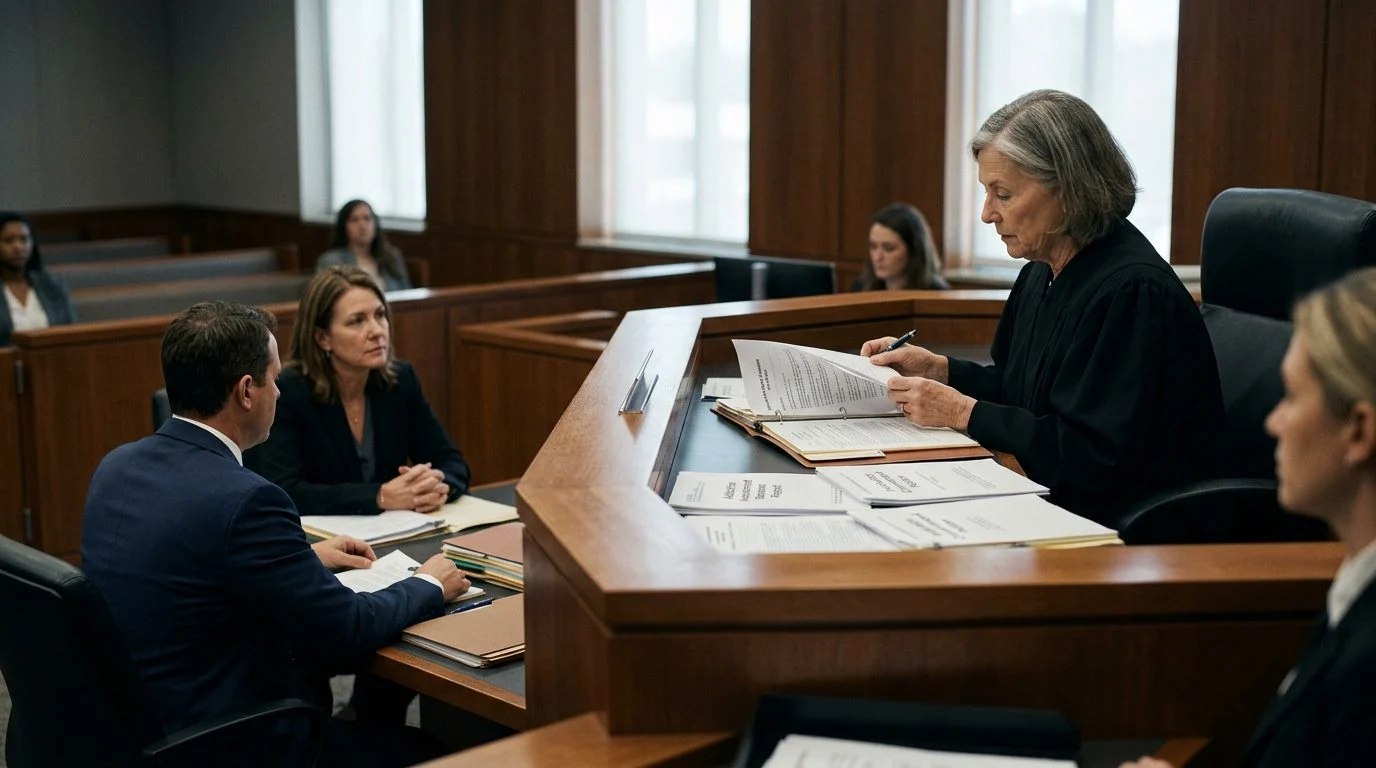
- The hearing. The person must attend unless the court finds that they knowingly, intelligently, and voluntarily waive the right to be present, or, after proof of service and review of the circumstances, that their presence is inconsistent with their best interests or likely to be injurious to self or others. The court hears all relevant evidence and may order drug tests. Testimony is under oath, and the person may refuse to testify.
- Before it ends, a provider may ask the court to renew it, as Fla. Stat. § 397.6975 describes.
How long each step takes depends on the county, the court’s calendar, and the facts of the case.
What Are the Common Questions About Cost, Counsel, and Release?
Families often ask about cost first. The clerk may not charge a filing fee for a Marchman Act petition.
How much does it cost to file a Marchman Act petition?
The clerk may not charge a filing fee under Fla. Stat. § 397.681. A court may also waive service-of-process fees for an indigent petitioner. Robinson Casey offers a free, confidential first consultation, with no obligation to continue.
Can the person have a lawyer?
Yes. The person has the right to counsel at every stage. They may waive it while present if the court finds the waiver is knowing, intelligent, and voluntary, but if the court believes they need or want counsel, it shall appoint a lawyer without regard to their wishes, and a court-appointed lawyer is available if they cannot afford one. The Second District has held that this right is constitutional, because due process is involved, in Hillsborough County v. Albrechta. The Second District has held that this right is constitutional, because due process is involved, in Hillsborough County v. Albrechta.
Can a family file without the person’s agreement?
Yes. Involuntary treatment is ordered by a court, so the person’s agreement is not needed before a petition is filed.
Can the person leave treatment early?
Yes, if the conditions that justified the order no longer exist. A person may be released early when they no longer meet the criteria and consent to voluntary status, under Fla. Stat. § 397.6971.
Why Families in Miami-Dade and South Florida Work With Robinson Casey
Robinson Casey limits its practice to Marchman Act petitions and guardianship matters. The firm serves families across South Florida and statewide, including Miami-Dade. Richard J. Casey III, Esq. is the responsible lawyer for this page. The firm’s lawyers and support staff work with families on each stage of the process.
The firm also handles guardianship matters, including emergency temporary, limited, plenary, and mental health guardianship.
In practice, the firm’s work centers on:
- Plain-language explanations of each step in the process
- Help organizing the timeline, records, and witness list
- Direct communication about what the family can expect at each stage
Each case stands on its own record. No result can be promised in advance.
Not sure what your next step is?
Talk it through with our team — the first consultation is free, confidential, and carries no obligation.

Talk With Robinson Casey About Your Family’s Situation
If you are watching a loved one’s cocaine use and weighing a court petition, you do not have to decide alone. Bring your timeline, any records, and your questions. Call (561) 849-4149 or request a consultation to talk through your family’s situation with Robinson Casey.
How Robinson Casey Works With Families
Focused Practice
Our firm limits its practice to Marchman Act and guardianship matters, so our attention stays on the court procedures that govern involuntary commitment for addiction.
Clear Explanation of the Process
Our lawyers explain each step of a Marchman Act petition, from the initial filing to the hearing, in plain language so you know what to expect.
Support for the Whole Family
Addiction affects everyone at home. Our team listens to your concerns and works to address the safety and well-being of your loved one.
Confidential First Consultation
Call (561) 849-4149 for a free, confidential first consultation with no obligation to continue.
Do Not Wait Until a Crisis Escalates
Court proceedings for involuntary commitment follow deadlines and procedures set by Florida law. Speaking with a lawyer early helps you understand your options before a situation becomes urgent.
Matters We Handle Under the Marchman Act
Marchman Act Petitions
We prepare and file petitions asking the court to order an assessment and treatment for a loved one with a substance use disorder, including cocaine addiction.
Guardianship Attorney Services
When a family member cannot make sound decisions about their care or finances, we handle guardianship filings and court proceedings.
Emergency Temporary Guardianship
For urgent situations, we assist families in requesting temporary court protection while the case moves forward.
Mental Health Guardianship
We represent families seeking guardianship for an adult whose mental health condition affects their ability to manage daily life.