
Marchman Act & Involuntary Commitment
Involuntary Commitment for Drug Addiction in Florida
When a loved one's addiction requires immediate intervention, the Marchman Act provides a legal path to court-ordered treatment. Robinson & Casey guides families through the petition process.
By Richard J. Casey III, Esq. · Published September 28, 2026
Involuntary Commitment for Opioid, Methamphetamine, and Drug Addiction in Florida
Florida’s Marchman Act applies to opioid, methamphetamine, cocaine, benzodiazepines, heroin, fentanyl, and any other controlled substance—the specific drug does not matter. What matters is whether your loved one shows a pattern of addiction that harms their health, safety, or ability to function. If voluntary treatment is refused and the situation is urgent, involuntary commitment through the Marchman Act may be available to your family.

Not sure what your next step is?
Talk it through with our team — the first consultation is free, confidential, and carries no obligation.
The Marchman Act Applies to Opioid, Methamphetamine, and Other Drug Addictions
Florida Statute § 397.675 permits involuntary commitment for substance addiction regardless of which drug is involved. Opioids, methamphetamine, cocaine, benzodiazepines, and other controlled substances all fall within the statute’s scope. The law focuses on the pattern of substance use and its impact on the person’s health and safety—not the particular drug.
Families often worry whether their loved one’s specific addiction qualifies for involuntary commitment. The answer is yes, provided the pattern meets statutory criteria. You don’t need to prove which drug is involved; you need to show that repeated use has caused harm and that the person cannot or will not stop.
Why Opioid Addiction Matters in Florida
Florida has been significantly affected by the opioid crisis. Prescription opioids, heroin, and fentanyl have driven addiction rates upward across the state. According to the National Institute on Drug Abuse (NIDA), opioid addiction carries high overdose risk and often progresses rapidly, making involuntary commitment necessary when voluntary treatment is refused.
The Marchman Act recognizes opioid addiction as a serious condition warranting court-ordered intervention. Families facing an opioid-addicted loved one often feel urgent pressure to act. The statute provides a legal pathway when time is critical and the person’s life is at risk.
Methamphetamine Addiction and Involuntary Commitment in Florida
Methamphetamine addiction is explicitly addressable under the Marchman Act. Meth use often involves rapid behavioral changes, paranoia, and dangerous decision-making that may require immediate intervention. The statute does not require the family to prove which specific drug is involved; evidence of substance addiction and its consequences is sufficient.
Involuntary commitment for methamphetamine addiction follows the same petition and hearing process as other drugs. The court applies the same legal standards and protections regardless of the substance.
How the Marchman Act Defines Addiction (Regardless of Drug)
The statute defines substance addiction as a pattern of pathological use resulting in impaired functioning or continued use despite harm. The specific substance is less important than the pattern: repeated use, inability to cut back, and negative life consequences.
A person may be addicted to one primary drug or multiple substances; the Marchman Act covers both scenarios. Medical evidence, behavioral observations, and testimony from family members all help establish the pattern. The court looks at whether the person’s use has damaged their relationships, employment, health, housing, or safety.
The Involuntary Commitment Process for Drug Addiction
A family member, healthcare provider, or law enforcement officer may petition the court for involuntary commitment. The petitioner must demonstrate that the person is addicted to a substance and poses a threat to their health, safety, or welfare.
Here’s what happens:
-
The Petition: A written petition is filed with the court, describing the person’s substance use, specific incidents, and why involuntary commitment is necessary.
-
Ex Parte Order: A judge may order an immediate ex parte commitment (up to 72 hours) while a full hearing is scheduled. This temporary order protects the person and gives the court time to gather evidence.
-
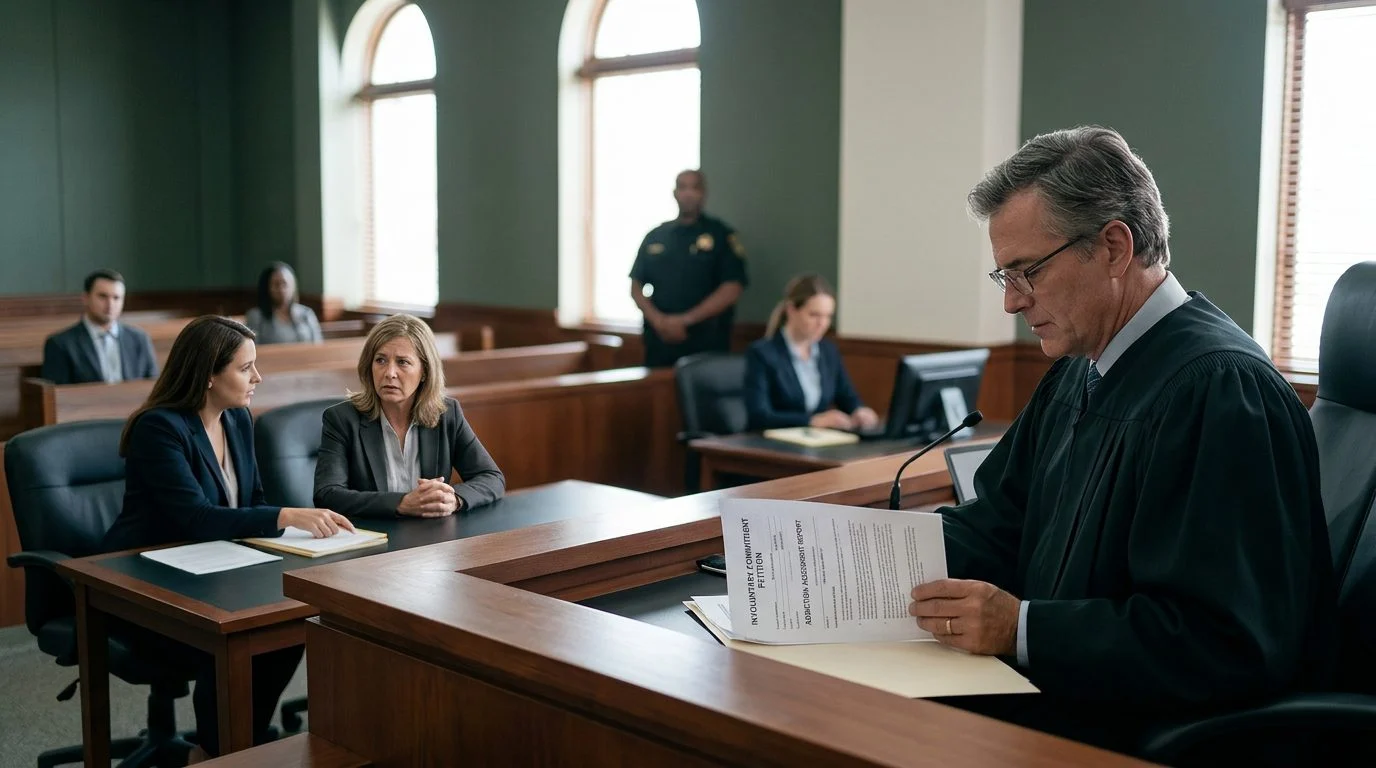
The Hearing: At the hearing, evidence is presented. The person facing commitment has the right to an attorney and to contest the petition. If the court finds grounds, it may order treatment for up to 60 days, renewable.
-
Treatment Placement: If ordered, the person is placed in a treatment facility approved for substance addiction.
The process is the same whether the addiction involves opioids, methamphetamine, or other drugs.
Have questions about what happened?
Ask our team directly. The first conversation is free, confidential, and there is no obligation to continue.
What to Expect During an Involuntary Commitment Hearing
The person facing commitment has the right to an attorney and to contest the petition. The petitioner (often a family member) may testify about specific incidents, behavioral changes, and the impact of the addiction.
Medical or clinical evidence may be presented to support the addiction diagnosis. The judge considers whether the person meets the statutory criteria and whether commitment is the least restrictive appropriate means of treatment.
The court must find clear and convincing evidence before ordering involuntary commitment—a high legal standard that protects the person’s rights. If the court finds grounds, it issues a treatment order placing the person in an approved facility.
Opioid, Methamphetamine, and Other Drugs: Treatment After Commitment
Involuntary commitment places the person in a treatment program; the specific program depends on the substance and the facility’s capabilities.
Opioid addiction treatment may include medication-assisted therapy (methadone, buprenorphine, or naltrexone) combined with counseling. According to SAMHSA, these medications reduce cravings and withdrawal symptoms, helping the person stabilize while engaging in therapy.
Methamphetamine addiction treatment typically focuses on behavioral therapy and cognitive interventions, as no FDA-approved medication exists for methamphetamine addiction. Treatment emphasizes coping skills, relapse prevention, and addressing underlying mental health issues.
The court order requires the facility to provide appropriate treatment and to report on the person’s progress. Family involvement in treatment planning and aftercare is often encouraged and can improve long-term outcomes.
When Involuntary Commitment May Be Necessary
Involuntary commitment becomes appropriate when:
- The person refuses voluntary treatment despite clear signs of addiction and harm.
- There is immediate danger: overdose risk, unsafe behavior, or inability to care for basic needs.
- The addiction is progressing rapidly and affecting employment, relationships, housing, or health.
- Previous voluntary treatment attempts have failed.
- The person lacks insight into the severity of their condition.
Challenges and Defenses in Involuntary Commitment Cases
The person may contest the petition by arguing they do not meet the statutory definition of addiction. They may claim the evidence is insufficient or that less restrictive alternatives exist.
Legal representation is important; both the petitioner and the respondent have rights in the process. The court must find clear and convincing evidence before ordering commitment. If the person disagrees with the order, they may appeal or petition for modification.
Renewing or Extending an Involuntary Commitment
An initial commitment order typically lasts up to 60 days. If the person continues to meet the statutory criteria and treatment is ongoing, the commitment may be renewed. Renewal requires another petition and hearing; the same legal standards apply. The goal is to provide sufficient time for stabilization and engagement in treatment.
Want to know where you stand?
Tell us what happened and our team will walk you through the options available to you, at no cost.
Frequently Asked Questions
Does the Marchman Act apply to heroin addiction?
Yes. Heroin is a controlled substance, and involuntary commitment for heroin addiction follows the same process as any other drug under the Marchman Act.
What if my loved one refuses to go to the hearing?
The person has the right to attend and be heard, but the hearing may proceed without them if they refuse. Their absence does not prevent the court from hearing evidence and making a decision.
How quickly can involuntary commitment happen?
An ex parte order can be issued within hours or days if the judge finds probable cause. A full hearing is typically scheduled within a few days to a week.
Can the commitment be appealed?
Yes. If the person disagrees with the court’s order, they may appeal or petition for modification through the Florida court system.
What happens after the 60 days end?
The person may be discharged, or if they continue to meet statutory criteria, the commitment may be renewed for another period. Treatment and recovery are ongoing processes.

Getting Help: Your Next Step
If you believe a loved one meets the criteria for involuntary commitment under the Marchman Act, consulting with an attorney familiar with the process is the first step. An attorney can review the specific facts, advise whether a petition is appropriate, and guide you through the process from start to finish.
Time is often critical in addiction cases; early intervention can prevent further harm and increase the likelihood of successful treatment engagement. Robinson & Casey handles Marchman Act petitions for families across South Florida and statewide.
If a loved one is struggling with opioid, methamphetamine, or another drug addiction and refuses treatment, families in your situation reach out to us regularly—let’s talk about your options. Schedule a consultation or call (561) 849-4700 to speak with an attorney about the Marchman Act and whether involuntary commitment may be right for your family.
Time Matters
Involuntary commitment petitions require prompt action and proper legal filing. Delays can affect your ability to move forward with court-ordered treatment.
The Marchman Act Process
File the Petition
A petition for involuntary commitment is filed with the court on behalf of the person struggling with addiction. Robinson & Casey prepares and files the necessary documents.
Court Hearing
The court reviews evidence of substance abuse and whether the person meets the legal criteria for involuntary commitment. Your attorney presents the case to the judge.
Treatment Order
If the court grants the petition, the person may be ordered into residential or outpatient treatment. The order is enforceable and designed to interrupt the cycle of addiction.
Legal Representation
Robinson & Casey represents families throughout the process, handling filings, court appearances, and ensuring your petition meets all statutory requirements.
Why Robinson & Casey for Marchman Act Petitions
Focused Practice
Robinson & Casey focuses exclusively on Marchman Act petitions and guardianship matters. We know the statutes, the courts, and the process.
South Florida & Statewide Service
We serve families across Miami-Dade, South Florida, and throughout Florida, handling petitions in courts across the state.
Direct Access
Contact us directly to discuss your situation. We answer your questions and explain your options without referrals or delays.
Advocacy for Your Family
We advocate for your loved one's recovery by ensuring the petition is properly filed and presented to the court with all necessary evidence.
Common Questions
Does the Marchman Act apply to heroin addiction?
Yes. Heroin is a controlled substance, and involuntary commitment for heroin addiction follows the same process as any other drug under the Marchman Act.
What if my loved one refuses to attend the hearing?
The person has the right to attend and be heard, but the hearing may proceed without them if they refuse. The court can still consider the evidence and make a determination.
What types of addiction qualify?
The Marchman Act applies to addiction to any controlled substance or alcohol. Involuntary commitment is available when the person meets the statutory criteria for substance abuse.
How long does the process take?
The timeline varies depending on court schedules and case circumstances. Robinson & Casey moves the petition forward efficiently while ensuring all legal requirements are met.
Ready to Discuss Your Family's Situation?
Related practice areas
- Involuntary Commitment for Addiction in Florida
- Renew or Extend an Involuntary Commitment Order for Addiction in Florida
- Challenge or Appeal an Involuntary Commitment Order for Addiction in Florida
- Involuntary Commitment For Addiction in Miami Dade
- Involuntary Commitment Addiction Florida: Costs & Timeline