
Marchman Act & Guardianship · South Florida
Strategies for Families Facing an Adult Child's Addiction in Florida
Robinson Casey focuses exclusively on Marchman Act petitions and guardianship matters for families across South Florida and statewide. Here is how to think through your next steps.
By Richard J. Casey III, Esq. · Published October 19, 2026
The most helpful strategies for dealing with an adult child who has an addiction are to protect safety, set clear limits, talk calmly, and keep the door open to treatment. A court process called the Marchman Act is one legal option, but it is one step among several, not the first one.
If you’re reading this for a son, daughter, or other adult in your life, you’re probably worried and tired. You didn’t choose this situation, and you don’t have to solve all of it at once. This guide covers practical steps for families in Miami-Dade, across South Florida, and elsewhere in the state.
Start by Understanding What You Are Dealing With
Addiction is generally treated as a chronic medical condition. It can change how a person thinks, feels, and makes decisions. That’s why a single talk rarely fixes things.
Many adults with addiction minimize the problem or deny it. That denial is common. It doesn’t mean your concern is wrong. You know this person’s history, and you’ve watched the changes over time.
Relapse is also a common part of the course of addiction. One setback doesn’t mean every effort has failed. It may mean the plan needs to change or that more support is needed.
Start by writing down specific, observable concerns. Include missed work, missing money, changes in sleep, secrecy, or legal trouble. Facts are harder to dismiss than labels like “out of control.” They also give a counselor or a court something concrete to work with.
If your adult child keeps refusing help and you're not sure what step comes next, you don't have to work it out alone. Call Robinson Casey at (561) 849-4149 to talk through your family's situation. Talk it through with our team — the first consultation is free, confidential, and carries no obligation.

Protect Safety First, Including Overdose Risk
Overdose is the most urgent risk, so plan for it first. Street drugs are unpredictable, and a single dose can be fatal. Families who wait for a crisis often have no clear steps ready.
Keep naloxone (Narcan) in the home, and show everyone who lives there how to use it. Post emergency numbers near the phone, including 911. The Florida Department of Health states that Floridians worried about a loved one’s substance use or emotional crisis can contact 988 for immediate crisis support.
Tell the people close to your adult child what is happening. When they know the plan, they can respond the same way you would. Write a short plan: who to call, what to say, and where to go.
Set Boundaries Around Money, Housing, and Enabling
Enabling means any action that shields your adult child from the results of substance use. Paying a debt, covering bail, or handing over cash with no conditions are common examples. These acts often come from love, but they can keep the addiction going. Partnership to End Addiction explains how to tell supportive help from enabling.
A boundary is what you will do. An ultimatum is a threat you may not follow through on. Boundaries work better because you can keep them. Choose a few that are specific and easy to explain. For example, you might decide on no cash loans, no drug use in your home, and housing support only while treatment continues.
Boundaries aren’t punishment. They protect your family’s money and peace of mind. They also remove a buffer that can let the addiction continue. State the boundary once, calmly, and then keep it.
Communicate Calmly and Choose the Right Moments
Talk about treatment when your adult child is sober and calm. Conversations during intoxication or withdrawal rarely lead to clear decisions.
Use “I” statements. Say, “I have noticed you’ve missed work this month, and I’m worried about you.” That lands better than, “You’re ruining your life.” Accusations push people into defense.
Keep each conversation focused on one small request, such as agreeing to a medical appointment. Trying to settle everything at once usually leaves both sides frustrated. Partnership to End Addiction advises parents to stay calm, listen rather than lecture, and focus on health and safety.
Repeated calm messages can matter, even when your adult child doesn’t respond right away. Stay consistent. Your message may still be heard later.
Encourage Voluntary Treatment and Understand the Options
The first goal is usually voluntary treatment, where your adult child agrees to get help. Under Florida law, a person who wants substance abuse treatment can apply to a service provider for voluntary admission. Fla. Stat. § 397.601 also says providers must emphasize the least restrictive setting that fits the person’s needs.
Treatment comes in different levels, from medical detox to residential programs to outpatient care. The right level depends on the person’s health and needs, and a service provider makes that assessment.
Many adults enter treatment after a medical scare, a job loss, or a direct family conversation. Your role may be to make treatment easier to reach. You can help with transportation, scheduling, and finding out which options exist locally.
Voluntary treatment depends on your adult child saying yes. When they say no, families often feel stuck. That’s where a legal option may come into the picture.
When a Loved One Refuses Help: The Marchman Act as One Legal Option
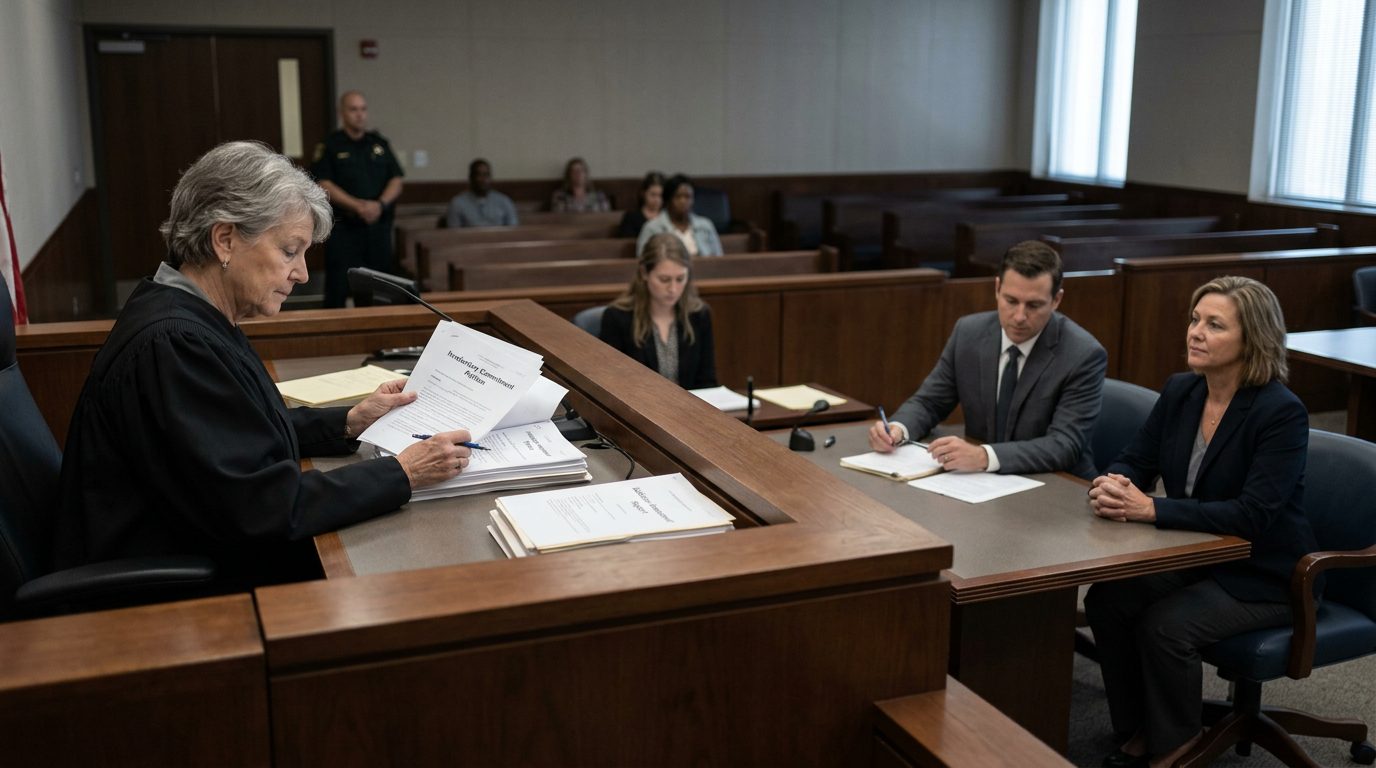
The Marchman Act is a Florida court process for adults with substance use problems who meet the statute’s criteria. Fla. Stat. § 397.675 provides that a person meets the criteria for involuntary admission if there is good faith reason to believe that the person is substance abuse impaired or has a substance use disorder and a co-occurring mental health disorder and, because of such impairment or disorder, has lost the power of self-control with respect to substance abuse.
For an adult, Fla. Stat. § 397.68112 allows a spouse or legal guardian, any relative, a service provider, or an adult with direct personal knowledge of the impairment and of the person’s prior course of assessment and treatment to file. The petition goes to the clerk in the county where the person is located, and the clerk may not charge a filing fee, under Fla. Stat. § 397.681.
The court sets a hearing within 10 court working days unless it grants a continuance, under Fla. Stat. § 397.68151. The court must hear all relevant evidence, including testimony from family members who know the person’s history, under Fla. Stat. § 397.6957. Whether this process fits your family depends on the facts.
Common Questions About the Marchman Act
Who can file a Marchman Act petition?
For an adult, a spouse, legal guardian, relative, service provider, or someone with direct personal knowledge of the impairment and of the person’s prior course of assessment and treatment may file.
Does my adult child have a right to a lawyer?
Yes. The respondent has the right to counsel at every stage, which the respondent may waive if present and the court finds the waiver knowing, intelligent, and voluntary; a respondent who wants counsel but cannot afford it has the right to court-appointed counsel, and the court must appoint counsel if it believes the respondent needs it.
Not sure what your next step is?
Talk it through with our team — the first consultation is free, confidential, and carries no obligation.
Take Care of Yourself and Keep a Record
Caring for an adult with addiction is hard on the whole family. Keep your own sleep, meals, work, and friendships in place. Burnout makes it harder to hold a boundary.
Keep a dated log of significant events. Note overdoses, threats, missed commitments, treatment attempts, and money requests. A clear record helps you spot patterns, and it can be useful if a legal option is considered later.
Setting limits for yourself is part of the plan. It isn’t a failure of love or effort.

Talk Through Your Family’s Situation With Robinson Casey
Talking through your options can help you see what step fits your family. You may be reading this late at night, worried about a child who won’t accept help, and not yet sure whether a court process is needed.
Call Robinson Casey at (561) 849-4149 or request a consultation to talk about your family’s situation. The firm focuses on Marchman Act petitions and guardianship matters in Florida. The first consultation is free, confidential, and carries no obligation to continue.
Richard J. Casey III, Esq. is the responsible lawyer for this page. Robinson Casey serves families in Miami-Dade County, across South Florida, and statewide.
How Our Firm Approaches These Cases
Focused Practice
Robinson Casey limits its practice to Marchman Act petitions and guardianship matters, so every case is handled within these areas.
Clear Preparation
Our team helps families organize records, timelines, and observations so that the petition process begins on a solid foundation.
Plain-Language Guidance
We explain each step, the options available, and what to expect, so you can make decisions with clear information.
Respect for Your Family
We recognize how difficult it is to watch someone you love struggle, and we approach every conversation with patience and discretion.
Don't Wait Until a Crisis
Addiction can escalate quickly. Gathering information and talking with a lawyer early gives your family more options to consider before a situation becomes an emergency.
Four Strategies to Consider Now
Document What You Observe
Keep a factual record of dates, incidents, medical or treatment contacts, and changes in behavior. Clear documentation helps a court and your attorney understand the situation.
Understand Your Legal Options
Marchman Act petitions, guardianship, and involuntary commitment for addiction each serve different needs. Learning how they differ is a useful first step.
Plan for Emergencies
Know who to contact, where your adult child can be reached, and what information a lawyer will need if a crisis arises. Preparation reduces stress when time is short.
Protect Your Own Well-Being
Caring for an adult child with addiction takes a toll. Support groups, counseling, and trusted family members can help you stay steady through a long process.