
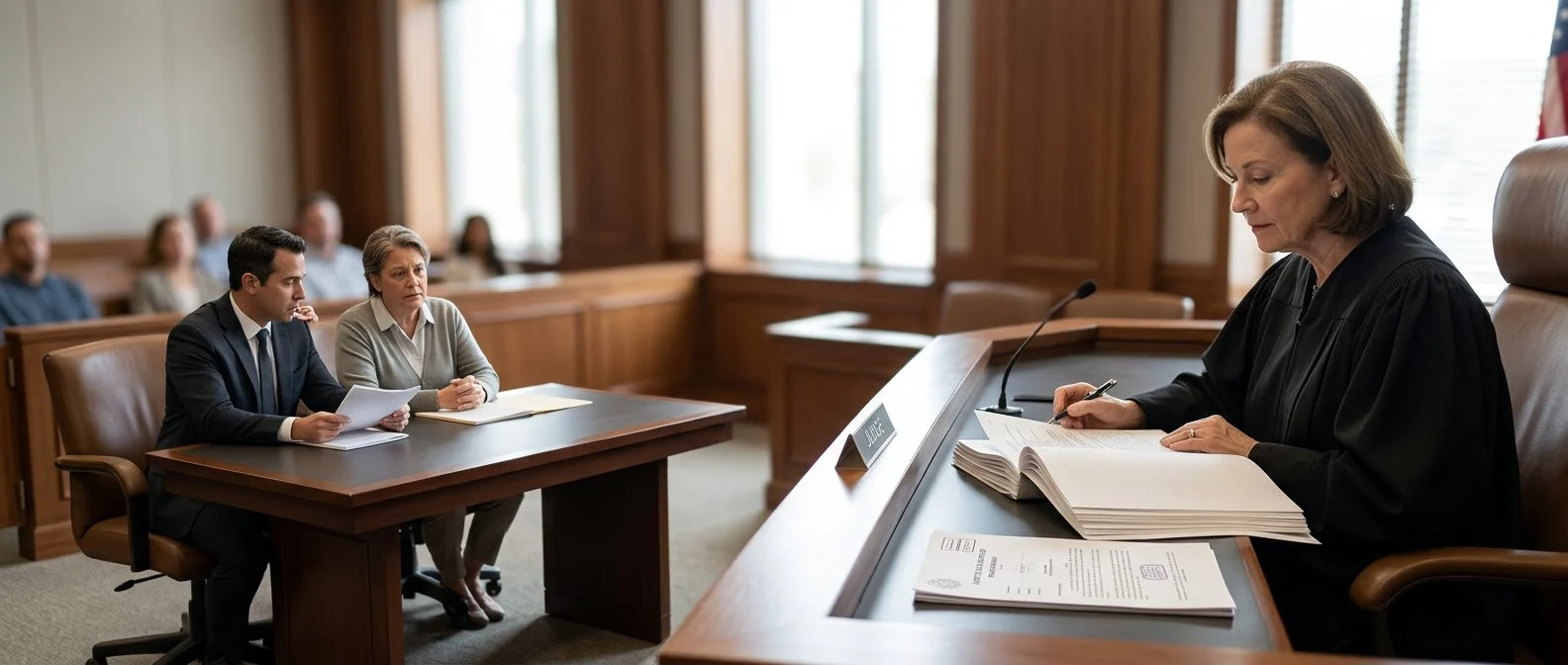
Limited Guardianship Modification
Modify Limited Guardianship in Florida: Expand or Reduce Powers
When a ward's circumstances change, the guardianship powers may need adjustment. Robinson & Casey guides families through the court petition process to modify limited guardianship orders.
By Richard J. Casey III, Esq. · Published September 20, 2026
Modifying a Limited Guardianship in Florida: When and How to Expand or Reduce Powers
A modification is a court petition that changes the specific powers granted to a guardian under an existing limited guardianship—without ending the guardianship itself. Your ward’s condition, abilities, or circumstances may shift after the guardianship begins, and Florida law allows you to adjust the guardian’s authority to match those changes.

Not sure what your next step is?
Talk it through with our team — the first consultation is free, confidential, and carries no obligation.
What It Means to Modify a Limited Guardianship
Modifying a limited guardianship means asking the court to change which decisions the guardian can make on the ward’s behalf. A limited guardianship grants specific, defined powers rather than full control over every aspect of the ward’s life—unlike a plenary guardianship, which gives the guardian broad authority.
Modification differs from termination in a crucial way: you’re adjusting the scope of the guardianship, not ending it entirely. The guardianship remains in place; only the guardian’s powers change.
Modification can move in two directions:
- Expand powers when the ward’s needs grow or new issues emerge
- Reduce powers when the ward regains capacity in certain areas
When You Might Need to Expand Limited Guardianship Powers
Your ward’s condition may deteriorate, or new medical or cognitive issues may surface after the original guardianship was established. The original guardianship might have been too narrow—covering only healthcare decisions, for example—but now the ward also needs a guardian to manage finances or living arrangements.
Common scenarios include:
- A ward who was managing their own finances now cannot handle bills, banking, or contracts
- Mental health or cognitive decline makes decision-making impossible in areas previously left to the ward
- New medical conditions require healthcare decisions the ward cannot make
- The ward’s support system has changed, and the guardian must now handle personal care or living arrangements
- Substance abuse relapse or other crisis requires expanded guardian authority
In these situations, you petition the court to add specific powers to the guardian’s authority. The court reviews evidence of the ward’s current condition and decides whether the expansion is necessary and in the ward’s best interest.
When You Might Need to Reduce Limited Guardianship Powers
Improvement is also possible. Your ward may recover capacity in one or more areas—mental health treatment may stabilize them, addiction recovery may restore judgment, or cognitive therapy may return decision-making ability in specific domains.
When a ward regains independence in certain areas, Florida law favors the least restrictive alternative. This principle means the court prefers to restore the ward’s autonomy wherever possible, rather than keeping unnecessary restrictions in place.
Reasons to reduce powers include:
- Ward has successfully completed addiction treatment and can now manage personal decisions
- Mental health medication and therapy have stabilized the ward’s condition
- Cognitive recovery allows the ward to handle certain financial or healthcare choices independently
- The ward’s circumstances or support system have improved, making full guardian authority unnecessary
- The ward has demonstrated reliable judgment in specific areas
Reducing powers honors the ward’s dignity and independence while keeping guardianship protections in place where they’re still needed.
The Florida Legal Process for Modifying a Limited Guardianship
Modification begins with a petition filed in the probate court that issued the original guardianship order. Under Florida Statutes Chapter 744, the petition must state which specific powers are being added or removed and include the factual basis for the change.
The court must notify the ward, the current guardian, and other interested parties. The ward has the right to object and to be represented by an attorney—this is not a unilateral guardian decision.
The judge may order an updated guardianship evaluation or medical assessment before ruling. This professional evaluation provides current evidence of the ward’s capacity and needs.
After reviewing the petition, evidence, and any objections, the judge issues an order granting, denying, or modifying the requested changes. The modified guardianship order becomes the new authority governing what the guardian can and cannot do.
Who Can Petition to Modify a Limited Guardianship
The current guardian is the most common petitioner. However, others may also file:
- The ward themselves, if they have capacity to petition
- Family members or interested parties in certain circumstances
- The court may initiate modification on its own motion if circumstances warrant
- An attorney representing any of these parties can file the petition on their behalf
Have questions about what happened?
Ask our team directly. The first conversation is free, confidential, and there is no obligation to continue.
What Evidence Supports a Modification Petition
Courts require current, credible evidence to support a modification. Generic statements about the ward’s condition are not enough.
Strong evidence includes:
- Updated medical or psychological evaluations showing the ward’s current capacity and any changes since the original guardianship
- Physician or mental health professional testimony about the ward’s condition, prognosis, and decision-making ability
- Documentation of specific incidents or decisions that demonstrate why current powers are insufficient or excessive
- Records showing the ward’s progress or decline since the guardianship began—treatment outcomes, hospital records, therapy notes
- Input from caregivers, family, or others with direct knowledge of the ward’s day-to-day abilities and judgment
- The ward’s own statements about their wishes and capabilities, if relevant and credible
Gather this evidence before consulting an attorney. It strengthens your petition and speeds the process.
Timeline and Costs of Modifying a Limited Guardianship
An uncontested modification—one the ward and other interested parties don’t oppose—may be resolved in weeks. Contested modifications take longer because they involve court hearings, evidence presentation, and possibly a trial.
Court filing fees apply in all cases. Attorney fees depend on the complexity of the modification and whether it’s contested. A straightforward expansion or reduction with clear evidence costs less than a disputed case requiring multiple court appearances.
In urgent situations—for example, when an immediate medical decision is needed—you may request expedited modification. The court has discretion to accelerate the process if circumstances warrant.
Common Mistakes to Avoid When Modifying a Limited Guardianship
Vague petitions. Filing a petition without specific details about which powers are changing and why wastes time and may result in denial. Be precise: “Add authority to manage the ward’s financial accounts and sign contracts” is far better than “Add financial powers.”
Inadequate notice. Failing to notify the ward and other interested parties violates their rights and can invalidate the modification. Follow all notice requirements strictly.
Stale evidence. Relying on old medical evaluations or outdated assessments weakens your case. Use current professional evaluations showing the ward’s present condition.
Proceeding without legal guidance. Guardianship modification involves specific procedural rules. Mistakes—missing deadlines, incorrect forms, procedural errors—delay the process and frustrate your goals.
Confusing modification with termination. Some families assume powers can be changed informally or that modification is the same as ending the guardianship. It is not. The court process is required.
Next Steps if You’re Considering Modification
Start by gathering current information about your ward’s condition and circumstances:
- Obtain recent medical, psychological, or professional assessments
- Document specific situations or decisions that show why current powers need to change
- Collect records showing the ward’s progress, setbacks, or new challenges
- Note any changes in the ward’s support system or living situation
Then, consult with an attorney who handles guardianship modification. They’ll review your circumstances, explain the court process, outline what evidence you’ll need, and guide you through notification and filing.
Understanding the process before you begin helps you prepare the strongest petition and set realistic expectations for timeline and cost.

Want to know where you stand?
Tell us what happened and our team will walk you through the options available to you, at no cost.
Frequently Asked Questions
Can a limited guardianship be modified without going to court?
No. Modification requires a court petition and order. Powers cannot be changed informally or by agreement alone.
Does the ward have to agree to modification?
No. The ward can object, but the court decides based on evidence of the ward’s best interest and current capacity.
How much does modification cost?
Filing fees and attorney fees vary. Uncontested modifications cost less than contested ones. Discuss fees with your attorney before proceeding.
Can modification happen quickly if it’s urgent?
Yes. You can request expedited modification in urgent situations, and the court may accelerate the process if circumstances warrant immediate action.
What if the court denies my modification petition?
You can file another petition if circumstances change significantly. Discuss the denial with your attorney to understand why and what evidence might strengthen a future petition.
If you’re managing a limited guardianship and your ward’s situation has shifted—whether their needs have expanded or their abilities have recovered—the modification process exists to keep the guardianship aligned with reality. Many families in South Florida and across Florida face this decision when circumstances change. Contact Robinson & Casey to discuss your ward’s current needs and explore whether modification makes sense for your family.
Court Order Required
Modification of limited guardianship powers cannot happen informally or by agreement alone. Florida law requires a formal court petition and judicial order. The ward may object, but the court decides based on evidence of the ward's best interest and current capacity.
When Modification May Be Necessary
Expanded Powers
The ward's condition has deteriorated, and the guardian now needs broader authority over medical decisions, finances, or personal care to protect the ward's welfare.
Reduced Powers
The ward has improved in capacity or functioning, and some powers can be returned to the ward to restore autonomy and independence where appropriate.
Changed Circumstances
New medical diagnoses, changes in living situation, or shifts in the ward's ability to handle specific decisions warrant a reassessment of guardianship scope.
Clarification of Existing Powers
The original order is ambiguous about what the guardian can or cannot do in certain areas, and modification clarifies the guardian's authority.
The Modification Process
Petition Preparation
We prepare a detailed petition for modification that explains the change in circumstances and the specific powers to be expanded or reduced, supported by medical or behavioral evidence.
Court Filing
The petition is filed with the probate court. Notice is served on the ward, the ward's attorney (if appointed), and other interested parties as required by Florida law.
Hearing Representation
We represent you at the modification hearing, present evidence of the ward's current capacity and needs, and advocate for the powers adjustment you seek.
Court Order
If the court approves, a new guardianship order is entered reflecting the modified powers. We ensure the order is clear and properly recorded.
Why Robinson & Casey for Guardianship Modification
Focused Practice
We focus exclusively on Marchman Act petitions and guardianship matters, including modification of limited guardianship orders across Florida.
Family-Centered Guidance
We work with families to understand the ward's evolving needs and help you navigate the court process with clarity and compassion.
Timely Action
Delays in modifying guardianship powers can leave the ward at risk or unnecessarily restrict their autonomy. We move efficiently through the petition and hearing process.
Direct Access
You work directly with our team. We answer your questions about the modification process and keep you informed every step of the way.
Ready to Modify Your Limited Guardianship?
Related practice areas
- Limited Guardianship in Florida: When Full Authority Isn’t Necessary
- Limited Guardianship in National
- Limited Guardianship in Miami Dade