
Marchman Act Petitions | Miami-Dade and South Florida
Where Marchman Act Treatment Takes Place in Florida
A plain-language guide for families in Miami-Dade and South Florida who are facing a Marchman Act petition. Robinson Casey focuses on these matters and guardianship cases.
Why families contact Robinson Casey
Free
First consultation, confidential and with no obligation to continue
Statewide
Serving families across South Florida and throughout Florida
By Richard J. Casey III, Esq. · Published October 23, 2026
Where Marchman Act Treatment Takes Place in Florida: The Short Answer
Marchman Act treatment takes place at a substance abuse service provider licensed in Florida. § 397.401 makes it unlawful for anyone to act as one without a license or a legal exemption.
Under Fla. Stat. § 397.401, it is unlawful for any person or agency to act as a substance abuse service provider unless it is licensed or exempt from licensure under this chapter. That chapter covers involuntary assessment and treatment for substance abuse impairment.
The setting follows the level of care the court orders. That may be residential, inpatient, or outpatient. Some providers are hospitals, detox facilities, or addictions receiving facilities. The state gives each county and municipal public safety office a list of these licensed providers, with their addresses, phone numbers, and services. § 397.6774
For most families, the real question is which provider the court names. That answer comes from the court’s order, not from the family’s choice.
If a family member may be sent to treatment you did not choose, you don't have to face the court process alone. Our team can talk it through with you. Talk it through with our team — the first consultation is free, confidential, and carries no obligation.

How the Court Decides Where a Person Is Assessed and Treated
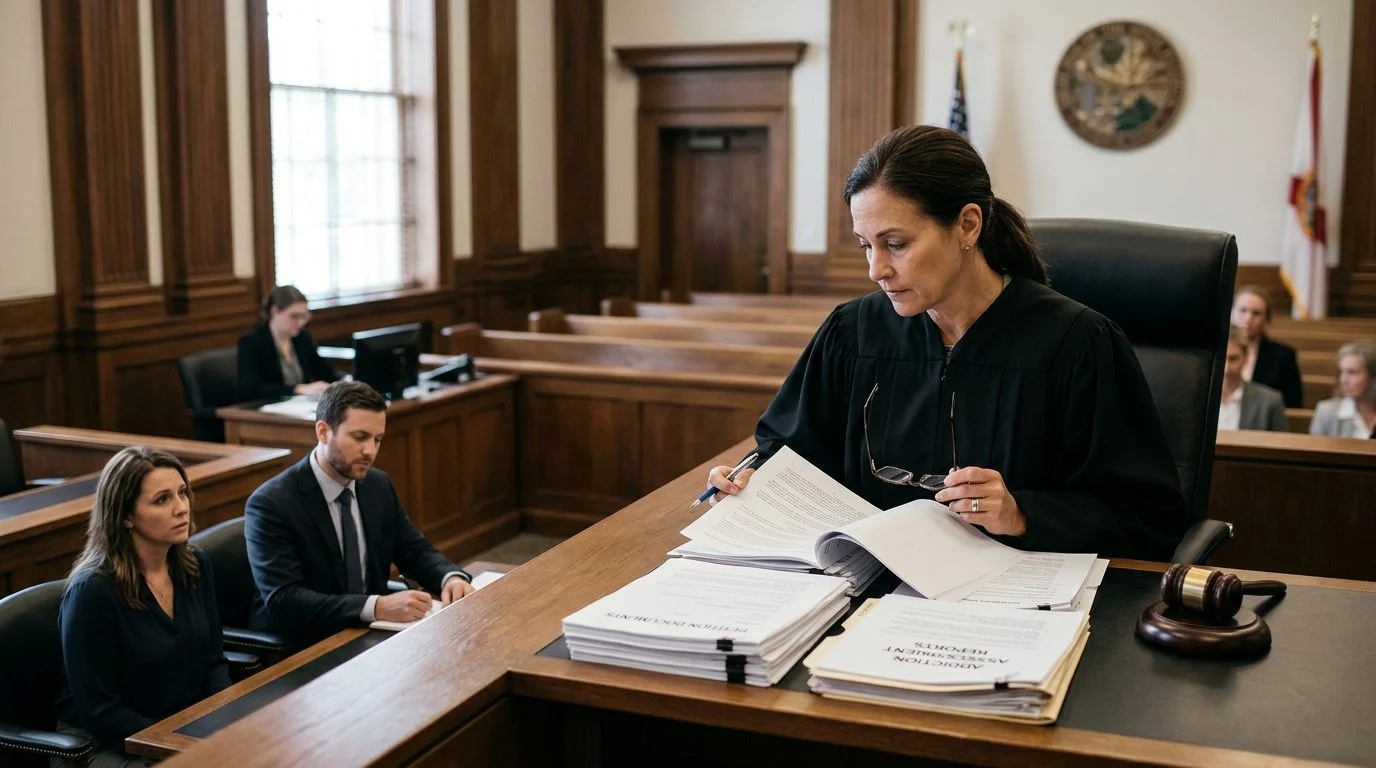
The judge makes the placement decision in the court order. Under § 397.697, the court may order treatment from a publicly funded licensed provider for up to 90 days, once the conditions are proved by clear and convincing evidence.
The court may also order treatment from a privately funded provider. That happens if the person can pay, or if someone on the person’s behalf voluntarily shows the willingness and ability to pay. If needed, the court can direct the sheriff to take the person to the named provider or the nearest appropriate one.
Before any treatment order, the court must find that the conditions for involuntary treatment services have been proved by clear and convincing evidence.
For the full petition and hearing steps, read the involuntary commitment guide.
How to Request a Marchman Act Petition in Florida
A relative can start the process. Under § 397.68112, an adult’s petition may be filed by a spouse or legal guardian, any relative, a service provider, or an adult with direct personal knowledge of the person’s impairment and prior treatment.
The petition must name the person and the petitioner. It must also state the relationship and the facts behind the request. § 397.68141 lists what those facts must show.
Refusing help alone is not enough. Under § 397.675, mere refusal to get services does not prove a lack of judgment about needing them. Fla. Stat. § 397.675 reads: “(b) Without care or treatment, is likely to suffer from neglect or refuse to care for himself or herself; that such neglect or refusal poses a real and present threat of substantial harm to his or her well-being; and that it is not apparent that such harm may be avoided through the help of willing, able, and responsible family members or friends or the provision of other services, or there is substantial likelihood that the person has inflicted, or threatened to or attempted to inflict, or, unless admitted, is likely to inflict, physical harm on himself, herself, or another.” Vague facts are a real risk. In D.H. v. K.J.R., the Second District held an ex parte order was wrong where the petition did not show a good faith reason to believe the criteria were met.
The person named in the petition has a right to counsel at every stage. § 397.681 sets that out. The respondent representation guide covers those rights in more detail.
Miami-Dade and South Florida: How Location Affects Placement
The county where the person is physically located decides where the petition is filed. § 397.681 requires filing with the clerk of court in that county. The clerk may not charge a fee for the filing.
In J.P. v. J.N., the Fifth District held that a petition filed in the wrong county did not take away the circuit court’s jurisdiction. However, the filing of the petition in the wrong county did not divest the circuit court in Putnam County of jurisdiction (J.P. v. J.N.).
For a person located in Miami-Dade County, the petition goes to the Miami-Dade clerk. Family members in other South Florida counties should look at where the person is, not where they live. That is the detail that drives where Marchman Act treatment takes place in Miami-Dade and the surrounding area.
Provider availability varies by county and by the level of care the court orders. Whatever county it is in, a placement must be with a licensed provider.
What Families Can Learn About the Setting Before Treatment Begins
The court may order the respondent to receive involuntary treatment services from the licensed provider specified in the order, or from the nearest appropriate provider. Families can ask their attorney for a copy of that order once it is entered.
The person keeps basic rights after placement. § 397.501 protects individual dignity and rights. It also says a person not accused of a crime may not be held in a jail, except for protective custody under the chapter. An individual involuntarily retained by a provider, or the individual’s parent, guardian, custodian, or attorney on behalf of the individual, may petition for a writ of habeas corpus at any time, without notice.
An order lasts up to 90 days. Renewal must be requested before that period ends. Whether an order can be ended or changed depends on the facts and the court file, so a lawyer should review the actual order.
Quick questions
Can a Marchman Act order send someone to jail?
Not for treatment alone. Under § 397.501, a person not accused of a crime may not be held in a jail, except protective custody.
Does the person have a right to a lawyer?
Yes. Under § 397.681, the respondent has the right to counsel at every stage of the proceeding, unless the respondent is present and the court finds that he or she knowingly, intelligently, and voluntarily waived that right.

Talk Through Your Situation With Robinson Casey
Learning that a loved one may be sent to treatment you did not choose is hard. You may be reading this while worried about someone who does not want help. You don’t have to work through the court process by yourself.
Robinson Casey focuses on Marchman Act and guardianship matters for families across South Florida and statewide. Richard J. Casey III, Esq. is responsible for this page.
Call (561) 849-4149 or reach out through our contact page to arrange a first consultation at no charge, confidential and with no obligation to continue. It is confidential and carries no obligation to continue.
What to expect when you call
Confidential conversation
Your first consultation is confidential, so you can describe your family's situation openly.
Plain answers
We explain the process, the court steps, and the questions you should be ready to answer.
Clear next steps
We review what paperwork exists, what deadlines may apply, and what the court will need from your family.
Direct access
Call (561) 849-4149 to speak with our team about your matter.
Don't wait until the situation becomes an emergency
Marchman Act proceedings and guardianship matters move on court schedules. Speaking with a lawyer early gives your family time to understand the options before a hearing is set.
Matters Robinson Casey handles
Marchman Act Petitions
Petitions for court-ordered assessment and treatment for substance use, filed by family members and others concerned about a loved one.
Guardianship
Plenary, limited and mental health guardianship matters, handled with attention to the person's needs and the family's concerns.
Emergency Temporary Guardianship
Urgent court requests for temporary protection when a person cannot safely manage their own affairs while a case is pending.
Involuntary Commitment for Addiction
Court proceedings under the Marchman Act for individuals whose substance use places their health or safety at serious risk.