
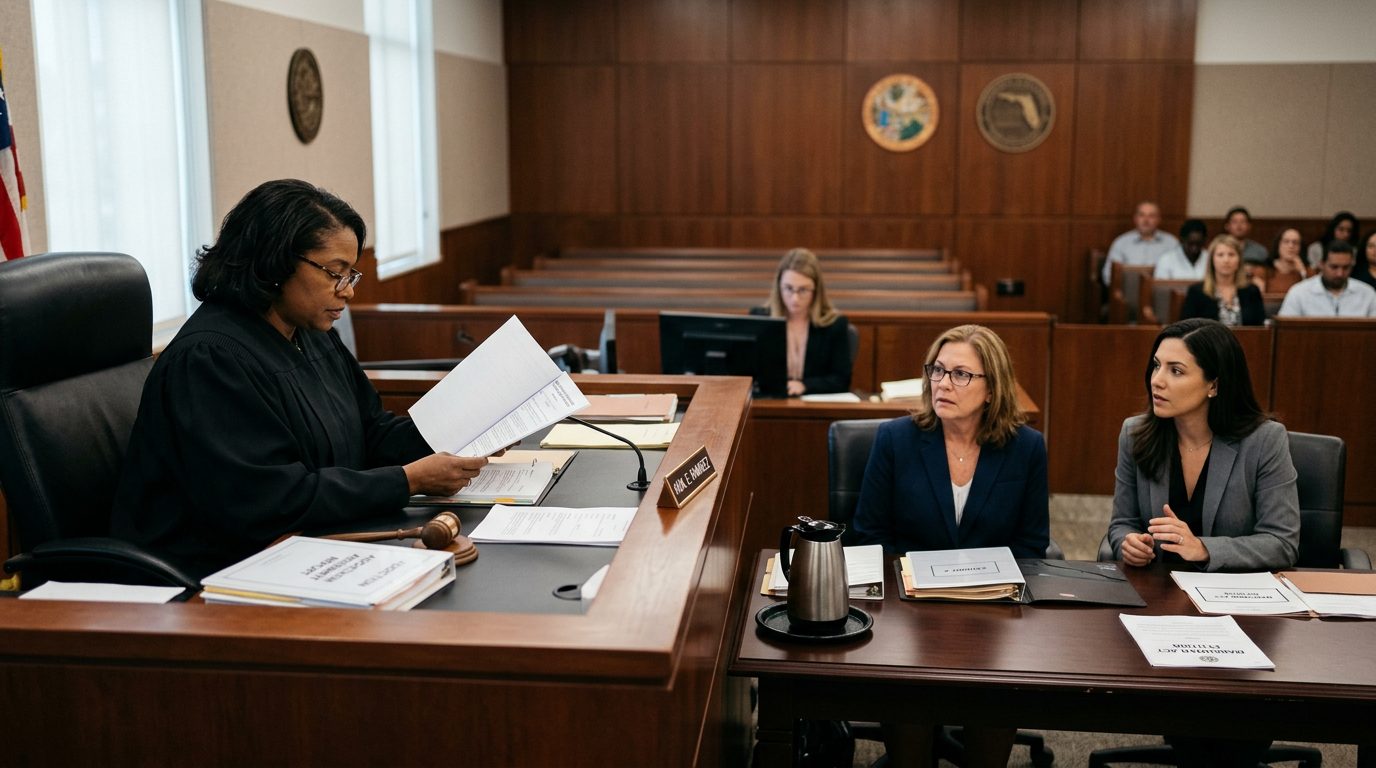
Marchman Act Petitions | Miami-Dade
Build a Stronger Marchman Act Petition with the Right Evidence
Robinson Casey focuses on Marchman Act petitions and guardianship matters for families in Miami-Dade and across South Florida. Learn what to gather before you file, and let us help you organize it.
By Richard J. Casey III, Esq. · Published October 20, 2026
A Marchman Act petition needs facts, not just worry. The court needs clear, specific proof that a person has a substance use problem and cannot accept the help they need. Good records and firsthand accounts make that proof easier to see. This guide explains the evidence families usually gather, how to organize it, and what happens after a Marchman Act detention begins. Robinson & Casey limits its practice to Marchman Act petitions and guardianship matters, serving families in Miami-Dade, across South Florida, and statewide.
Understanding the Marchman Act and What a Petition Must Show
A Marchman Act petition must give the court facts that match the legal test for involuntary services. Florida law says a person meets the criteria for involuntary admission if there is good faith reason to believe they are substance abuse impaired, or have a substance use disorder and a co-occurring mental health disorder, and because of that they have lost the power of self-control and either need substance abuse services and are incapable of appreciating that need and of making a rational decision about it, although mere refusal to receive such services does not constitute evidence of lack of judgment, or are likely to neglect themselves or refuse care, that neglect poses a real and present threat of substantial harm, and it is not apparent that such harm may be avoided through the help of willing, able, and responsible family members or friends or the provision of other services, or there is substantial likelihood that the person has inflicted, or threatened to or attempted to inflict, or, unless admitted, is likely to inflict, physical harm on himself, herself, or another. Fla. Stat. § 397.675 sets out these criteria. Fla. Stat. § 397.675 sets out these criteria. Under Fla. Stat. § 397.68141, the petition must also name the respondent, name the petitioner, explain how they are related, and name the respondent’s attorney, if known. Fla. Stat. § 397.68141 requires factual allegations for each part of that test. Each allegation needs a reason behind it. For background on how substance use disorders develop, the National Institute on Drug Abuse publishes research you can review.
If you are gathering records for a family member in crisis, our team can review what you have and what the court will look at, with no obligation to continue. Talk it through with our team — the first consultation is free, confidential, and carries no obligation.

Core Medical and Treatment Records
Treatment and medical records are the most direct proof of a substance use problem and of past efforts to get help. Start by gathering every record you can find. Include discharge summaries from rehab or detox, treatment plans, and notes from doctors, counselors, or therapists. Add emergency room and hospital records tied to overdose or medical problems from drug or alcohol use. Prescription records can show controlled-substance patterns, and toxicology or drug screening reports can show what was in the person’s system. A written assessment helps too. The petition may include a report from a qualified professional who examined the person within 30 days before filing. Fla. Stat. § 397.68141 says that if the person was not assessed or refused an assessment, the petition must say so. Note the dates on every record. Dates help the court place each event in order.
Personal Accounts, Witnesses, and Everyday Evidence
A detailed written account with dates and specific events gives the court something concrete to weigh. Describe what you saw, what was said, and when it happened. Name the places and the people who were present. Witnesses can strengthen the record. Family members, friends, employers, or others who saw the behavior can give statements. Fla. Stat. § 397.6957 says the court considers testimony from family members familiar with the person’s prior history and how it relates to their current condition. Testimony at the hearing must be taken under oath. Employment records can show the effect on work, such as warnings, write-ups, termination letters, or attendance problems. Financial records, such as unpaid bills tied to spending on substances, can show a pattern. Photos or videos can help too. Use them carefully, and keep them lawful. Do not record a person in a way that breaks the law or invades their privacy.
Court Records and Prior Orders
Court records show history the judge may not know about. Gather any arrest records or criminal charges tied to substance use, including DUI cases. Also gather any earlier Marchman Act petitions or orders about the same person. Protective orders or restraining orders that mention threats or violence linked to substance use are also important. If child protective services has been involved because of substance use, keep those records as well. Request certified copies from the clerk where you need them for the record. Filing itself carries no clerk fee. Fla. Stat. § 397.681 provides that the clerk of the court may not charge a fee for filing a petition under that section. Keep copies of everything you file, and note the case number for each document.
Organizing Your Evidence for the Court
Organize your evidence in date order, label each item, and list everything in one index. Start with a timeline. Write one line for each event, with the date, a short description, and the document that proves it. Number each document to match the timeline. Put a cover sheet at the front that lists every item you are submitting. Sign a written affidavit, a sworn statement, that tells your story in your own words. Keep it factual and tied to what you saw or know firsthand. Firsthand facts usually help more than what someone else told you. Mark any document you received from another person and note who gave it to you. Keep the originals safe. Make copies for your own file and for anyone helping you.
Can You Sue for a Wrongful Detention?
Whether a detention can support a claim depends on how the order was issued and what the record shows. The petition must include factual allegations, so the paperwork itself matters. Fla. Stat. § 397.6818 lets a court enter an emergency order based on the petition alone, without appointing an attorney first. That makes the petition’s facts central. Save the order, the petition, every notice, and the dates they were served. Write down each statement that was made and by whom. A lawyer can compare those documents against the statute’s requirements. That review helps show whether the order has problems. The person detained also has rights. Fla. Stat. § 397.681 gives a respondent the right to counsel at every stage of a judicial proceeding on a petition for involuntary treatment for substance abuse impairment, unless the respondent waives that right knowingly, intelligently, and voluntarily while present. A respondent who wants counsel and cannot afford private counsel has the right to court-appointed counsel.
Not sure what your next step is?
Talk it through with our team — the first consultation is free, confidential, and carries no obligation.
How Long Can Someone Be Held?
A service provider may hold a person for up to 72 hours of observation under an emergency order, unless an exception applies. Fla. Stat. § 397.6818 lists the exceptions. The observation period can be extended if the court grants more time after a hearing. It can also be extended while the person shows withdrawal or needs treatment for a medical condition, but no later than the scheduled hearing date, absent a court-approved extension. If the period ends on a weekend or holiday, the provider may hold the person until the next court working day. Longer treatment needs a court order. Fla. Stat. § 397.697 allows a court to order involuntary treatment for up to 90 days when the conditions are proved by clear and convincing evidence. Track the dates in your timeline. Note when the order was issued, when the assessment was done, and when the person was released or moved to treatment.
What Happens If Someone Resists an Order?
Refusing an order can make the process harder, and it does not change the paperwork that the court reviews. The respondent must be present at the hearing unless the court finds they knowingly, intelligently, and voluntarily waive their right to be present or, upon receiving proof of service and evaluating the circumstances of the case, that their presence is inconsistent with their best interests or is likely to be injurious to self or others. Fla. Stat. § 397.6957 sets out those rules. If the court later enters a treatment order, Fla. Stat. § 397.697 provides that the court retains jurisdiction over the case and the parties to enter further orders, including monitoring compliance with treatment, changing the treatment modality, or initiating contempt of court proceedings for violating a valid order. The court also keeps authority to enforce its orders. It can start contempt proceedings for violating a valid order under the same statute. If you believe an order is wrong, raise it with the court and talk with a lawyer right away. Do not try to handle it alone by ignoring the order.
Firearm Rules After a Commitment
A person who has been committed to a mental institution may not own or possess a firearm until relief is obtained. Fla. Stat. § 790.064 sets this firearm disability. The same statute lets the person ask the court that made the commitment for relief. Gather a copy of the order and any findings it contains. Those documents show what the court actually decided. Whether a particular order falls under this rule depends on whether the person was adjudicated mentally defective or committed to a mental institution, as defined in s. 790.065(2), so read the order closely. A lawyer can help you read the order and explain what steps apply.

When to Talk With a Lawyer About Your Documents
Talk with a lawyer once you have your core records and a clear timeline, so the lawyer can check them against the law. Bring the petition or order, every record you gathered, your timeline, and your affidavit draft. A lawyer can spot gaps, such as a missing assessment or an unclear date. Robinson & Casey offers a free first consultation that is confidential and carries no obligation to continue.
Frequently Asked Questions
Who can file a Marchman Act petition?
For an adult, a spouse or legal guardian, any relative, a service provider, or an adult with direct personal knowledge may file.
How long can someone be held on an emergency order?
Observation can last up to 72 hours under Fla. Stat. § 397.6818, with statutory exceptions.
Does a commitment affect gun ownership?
A commitment to a mental institution can create a firearm disability until relief is obtained, under Fla. Stat. § 790.064.
Do I need a lawyer to file?
You may file on your own, but a lawyer can review your documents and the legal requirements. You can contact Robinson & Casey to start that review.
How Robinson Casey Can Help
Organized Documentation
We help you sort records, notes and communications into a clear, usable file for your petition.
Confidential Discussions
Your family's private health and history information is handled with care from the first call.
Practical Guidance
We explain which details matter most and how to present them accurately, based on your situation.
Direct Communication
Our team keeps you informed about next steps so you know what to expect as your matter moves forward.
Evidence Families Often Gather
Treatment and Medical Records
Records of prior treatment, detox or hospital visits, and any professional recommendations can help show the history behind your concerns.
Documented Incidents
Keep a dated log of specific events, including what happened, who was present and any resulting harm or risk.
Witness Information
Names and contact details of relatives, friends, employers or service providers who observed the behavior can be valuable to your petition.
Communications and Messages
Texts, voicemails and emails that reflect the person's condition or statements may support the facts you describe.
Handle Your Evidence Carefully
Do not alter, delete or selectively edit messages, records or notes. Keep originals intact and share sensitive material only with your attorney, not on social media.